IF IT GOES ... IT'S VEHICULAR
E3 Spark Plugs: My Honest Review After 2 Years on a BMW
I put a set of E3 spark plugs in my 2002 BMW R1150RT and I have been riding on them ever since. The flat-twin boxer in that bike is particular about ignition, and it does not hide problems. A weak spark shows up as fluffy throttle response, uneven idle, and mileage that drifts the wrong direction. So when I tell you the E3 plugs tightened up throttle response and moved my fuel mileage from 42 to about 46 MPG, that is not a lab number. That is the same rider, the same roads, and the same right wrist, before and after.
At around $12 a pair for the bike, E3 spark plugs are one of the cheapest experiments I have ever run on a vehicle. Here is what they are, what they did for me, what they will not do, and how to decide whether they belong in your engine.
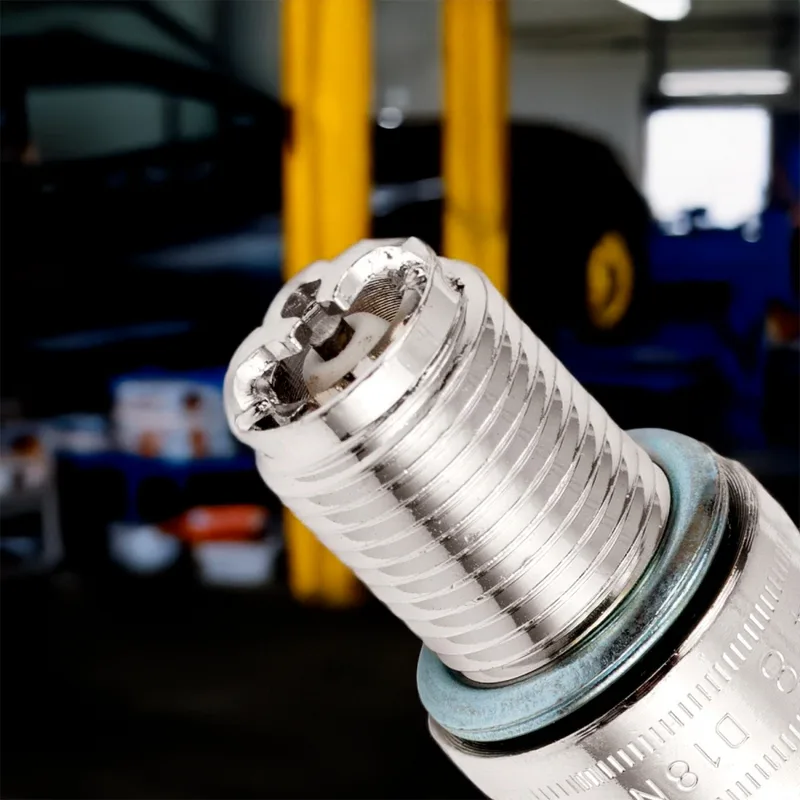
What Makes E3 Spark Plugs Different
A conventional spark plug fires across a gap between a center electrode and a single ground electrode shaped like a small hook. It works, and it has worked for a century. The tradeoff is that the ground electrode sits directly over the spark and absorbs heat from the flame kernel as it forms. Engineers call that quenching, and it steals energy from the earliest and most important phase of combustion.
E3 spark plugs replace that hook with an open, diamond-shaped ground electrode the company calls DiamondFire. The design exposes more electrode edge to the air-fuel mixture and leaves the flame kernel room to grow instead of smothering it against a flat pad of steel. The claim is a bigger, more consistent spark and more complete combustion. Unlike a lot of spark plug marketing, the geometry argument is at least real physics. Edges concentrate electrical fields, and an open ground strap does reduce quenching.
Whether that translates to anything you can feel depends entirely on the engine it goes into, which is where my bike comes in.
Real-World Results on a BMW R1150RT
The R1150RT is a good test mule for E3 spark plugs precisely because it is an older, carbureted-feeling, air-and-oil-cooled twin with a known appetite for ignition quality. BMW twins of this era are famous for surging at steady throttle, and half the fixes on the forums are ignition related. If a plug is going to make a difference anywhere, it is here, not in a modern car whose ECU papers over everything.
Two things changed after the swap. Throttle response off idle and in the 3,000 to 4,000 RPM cruising range tightened up noticeably. The slight hesitation when rolling back on after a closed throttle was reduced enough that I stopped thinking about it. And fuel mileage climbed from a consistent 42 MPG to about 46 MPG over the tanks that followed, roughly a 10 percent improvement, riding the same commute and the same weekend loops.
I want to be honest about the limits of that data. It is one bike, one rider, and no dyno. An older engine with tired plugs will improve when you install almost any fresh plug, and some of my gain is certainly just that. But the R1150RT had healthy, correctly gapped plugs in it before the E3 set went in, so I do not think fresh versus worn explains all of it. When I later tore the bike down, the plugs came out with a clean, even, light tan burn on both cylinders, which is exactly what you want to see.
What E3 Spark Plugs Cost
Depending on the application, E3 spark plugs run about $6 to $15 per plug. My bike took a pair for around $12. That puts them in the same bracket as premium plugs from NGK or Denso, sometimes cheaper. This matters, because the usual knock on specialty plugs is that they cost three times what a proven iridium plug costs. E3 is not asking for a premium. You are choosing between roughly equal-priced options, which changes the risk math entirely.
On a two-plug motorcycle the experiment costs less than lunch. On a V8 it is still under $100. If the design does nothing for your particular engine, you have lost almost nothing over the plugs you would have bought anyway. Check E3 spark plug fitment for your vehicle on Amazon before you buy, because the catalog does not cover every engine.
E3 Spark Plugs for More Than Cars
E3 builds plugs for automotive, powersports, marine, racing, and small engine use. In my experience the small engine and powersports applications are where owners report the most obvious differences, and that tracks with the theory. Motorcycles, ATVs, mowers, and outboards mostly run simpler ignition systems with less computer compensation, so improvements in the spark itself have nowhere to hide. My mower gets one, my bike got two, and the pattern held both times: easier starting and a smoother run.
In a modern fuel-injected car with coil-on-plug ignition and knock sensors, expect much less. The ECU is already optimizing everything around whatever plug is installed. That is not E3 spark plugs failing, it is a modern engine leaving less on the table for any plug to recover.
Installation: Do Not Skip the Basics
Installation is identical to any other plug, and so are the ways to ruin it. Check the gap against your engine’s specification before installation, even though E3 spark plugs come pre-gapped, because shipping happens. Inspect the threads in the head, start every plug by hand, and torque to spec with an actual torque wrench. Never run plugs in with an impact wrench. Aluminum heads do not forgive that, and no plug design saves you from stripped threads.
On the R1150RT the whole job is 20 minutes with the bike on the centerstand, and it is a good excuse to look over the coils and leads while you are in there.
The Skepticism, Addressed
Spend ten minutes on the CarTalk forum and you will find people calling every aftermarket plug a gimmick, E3 included. Some of that skepticism is earned by decades of miracle plug advertising, and I share it. The honest position is this: the DiamondFire design is real engineering with a plausible mechanism, documented by outlets like MotorTrend, and the results vary by engine. Older engines and simple ignition systems tend to show measurable gains. Modern computer-managed engines mostly do not. Nobody should expect a spark plug to add horsepower to a healthy 2024 sedan, and E3 does not need that claim to be worth buying at this price.
How Long Do E3 Spark Plugs Last
E3 rates most of its automotive plugs for around 100,000 miles and backs the premium lines with a five-year warranty, which is in line with the iridium plugs everyone already trusts. The ground electrode design also has a durability argument going for it. With no thin hook hanging over the center electrode, there is less material sitting in the hottest part of the flame to erode away. My set on the R1150RT has two years and a lot of miles on it, and the gap has held where I set it.
The practical advice does not change with brand. Pull a plug once a season and read it. Color tells you about mixture, gap growth tells you about wear, and ten minutes with a feeler gauge is cheaper than guessing.
E3 Spark Plugs vs Iridium: Which Should You Buy
This is the real question for most people, because nobody is cross-shopping E3 spark plugs against the cheapest copper plug on the shelf. Iridium plugs from NGK and Denso win on one axis: the fine-wire center electrode needs less voltage to fire, which matters in high-compression modern engines with long service intervals. E3 wins on the ground electrode side, where the open DiamondFire design reduces quenching in a way a conventional hook cannot.
My rule after running both: modern daily driver with coil-on-plug ignition, buy whatever OEM specifies, usually iridium, and change it on schedule. Older vehicle, motorcycle, boat, or small engine, the E3 design has a real shot at a difference you can feel, and it costs about the same. That is the whole decision. There is no wrong answer at this price, there is only matching the plug to the engine you actually own.
Bottom Line
E3 spark plugs earned a permanent spot in my maintenance routine on results, not marketing. On my R1150RT they delivered sharper throttle response and roughly 10 percent better fuel mileage for the price of an ordinary set of premium plugs, and the burn pattern at teardown confirmed clean combustion. If you run an older vehicle, a motorcycle, a boat, or small engines, they are an easy recommendation and a cheap experiment. If you drive something new with a computer managing every spark, buy them for the build quality and the price, not for a transformation. Either way, confirm your fitment on Amazon, gap them, torque them right, and let the engine tell you the rest.