IF IT GOES ... IT'S VEHICULAR
What Is Diesel Exhaust Fluid: Everything New Diesel Owners Need to Know
You just bought a diesel truck. You open the fuel door and there are two caps. One is green and says diesel. The other is blue. Nobody told you about the blue one. Welcome to diesel exhaust fluid, the thing every new diesel owner has questions about and nobody explains properly at the dealership.
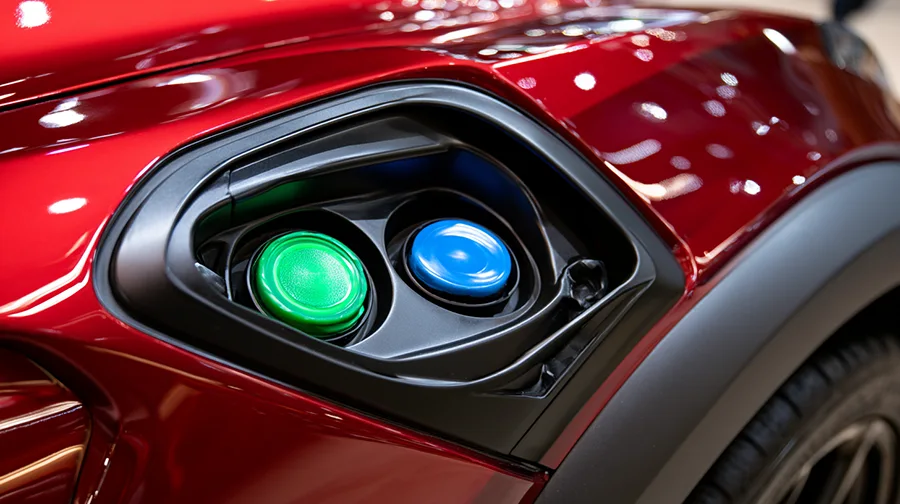
That blue cap is your DEF fill point. What is in that tank matters, what happens when it runs out matters more, and the good news is that once you understand it, diesel exhaust fluid stops being mysterious and starts being just another fluid you keep an eye on.
What Diesel Exhaust Fluid Actually Is
Diesel exhaust fluid is a liquid solution made of 32.5 percent urea and 67.5 percent deionized water. That is the entire formula. There is nothing exotic about it. Urea is a naturally occurring compound found in fertilizer, and the version used in DEF is synthetically produced to a tight purity specification called AUS 32, which stands for Aqueous Urea Solution at 32.5 percent concentration.
The 32.5 percent ratio is not arbitrary. It is the exact concentration at which the freezing point of the solution is at its lowest, around negative 11 degrees Fahrenheit. Go higher or lower and the freeze point rises. The ratio is optimized for cold weather survival, which matters if you park a diesel truck outside in January.
DEF is not a fuel additive. It does not go in your fuel tank. It does not mix with your diesel. It lives in its own separate tank, fed by its own separate system, and it never touches your fuel or your engine oil.
Why Diesel Exhaust Fluid Exists
The short answer is emissions regulations. The longer answer starts with nitrogen oxides, or NOx, which are a byproduct of diesel combustion and a significant contributor to air pollution and smog. The EPA tightened diesel emissions standards starting in 2010, and diesel exhaust fluid is the solution the industry landed on to meet those standards in light-duty and heavy-duty trucks. If you are still getting up to speed on how diesel fuel itself works, the breakdown on winter diesel fuel is a good place to start.
The system that uses DEF is called Selective Catalytic Reduction, or SCR. Here is how it works. Your engine burns diesel and produces exhaust gases including NOx. Before those gases exit the tailpipe, they pass through the SCR catalyst. At that point, a precise amount of diesel exhaust fluid is injected into the exhaust stream. The heat converts the urea in the fluid into ammonia. That ammonia reacts with the NOx in the catalyst and converts it into nitrogen and water vapor, two things that are already in the air and are not pollutants.
The result is a dramatic reduction in NOx emissions, somewhere in the range of 90 percent compared to a diesel without SCR. It is genuinely effective chemistry, and it is why modern diesel trucks can meet emissions standards that would have been impossible with engine modifications alone. For a deeper look at how the exhaust side of a modern diesel works, the diesel exhaust systems piece covers the full picture.
When Diesel Exhaust Fluid Became Required
If you bought a diesel truck built after 2010, it almost certainly has an SCR system and requires diesel exhaust fluid. The 2010 model year is when the EPA’s Tier 2 Bin 5 emissions standards took effect for light-duty vehicles, and SCR with DEF became the dominant technology for compliance.
The 3.0L Duramax in my 2026 GMC Sierra uses SCR and requires DEF. So does the 6.7 Cummins in Ram trucks, the 6.7 Power Stroke in Ford Super Duty trucks, and virtually every other modern light-duty and medium-duty diesel sold in the United States. If your diesel was built in the last 15 years, check the fuel door. You almost certainly have a blue cap.
How Much Diesel Exhaust Fluid Your Truck Uses
DEF consumption is roughly two percent of fuel consumption. For every 50 gallons of diesel you burn, you will use approximately one gallon of diesel exhaust fluid. In practice, most light-duty diesel trucks get somewhere between 5,000 and 8,000 miles per fill on the DEF tank depending on how the truck is driven. Highway miles at steady speed use less. Heavy towing and stop-and-go use more.
The 3.0L Duramax has a DEF tank of approximately 5.3 gallons. At two percent consumption against real-world fuel economy in the mid-20s, that works out to roughly 6,000 to 7,000 miles between DEF fills under normal driving conditions. Your truck will tell you when it is getting low. Pay attention to it.
What Happens When Diesel Exhaust Fluid Runs Out
This is the part that gets new diesel owners’ attention. Modern diesel trucks are programmed to enforce DEF compliance. When the DEF level gets low, the truck starts warning you. Those warnings escalate as the tank gets closer to empty.
On the Duramax, the warning sequence typically starts around 1,000 miles of remaining DEF range. You get a gauge warning and a message. As it gets lower, the warnings become more frequent and more insistent. If you ignore all of them and actually run the tank dry, the truck will limit your speed, typically to around five miles per hour, until you add diesel exhaust fluid. You are not going to damage the engine by running out of DEF, but you are going to have a very slow and embarrassing drive to the nearest auto parts store.
The system is designed this way by federal regulation. Manufacturers are required to implement a inducement strategy that prevents the truck from operating normally without a functioning SCR system and adequate DEF. You cannot defeat it, and you should not try.
Which Diesel Exhaust Fluid to Buy
DEF is a commodity product. The chemistry is standardized and the quality specification, ISO 22241, is the same across brands. As long as the product is certified to that standard, the brand does not matter for your truck’s SCR system.
That said, some brands are more convenient than others depending on where you buy and how much you want to spend.
Blue DEF is the most widely recognized brand and is available at virtually every truck stop, auto parts store, and big box retailer in the country. It comes in 2.5-gallon jugs with a no-spill nozzle that fits the DEF fill port without an adapter. If you want the most recognizable product with the widest availability, this is it.
If you drive a GM product and want to stay in the GM ecosystem, ACDelco GM Original Equipment DEF is the factory-recommended fluid. It meets the same ISO 22241 standard and is what the dealer will top off your tank with during service. There is no performance difference between this and any other certified DEF, but if you want the OEM stamp on everything that goes into your truck, this is your product.
Prime Guard DEF is a solid value option that meets the same specification at a lower price point. If you are filling a large tank or want to keep a spare jug in the garage without spending Blue DEF money, Prime Guard is worth considering.
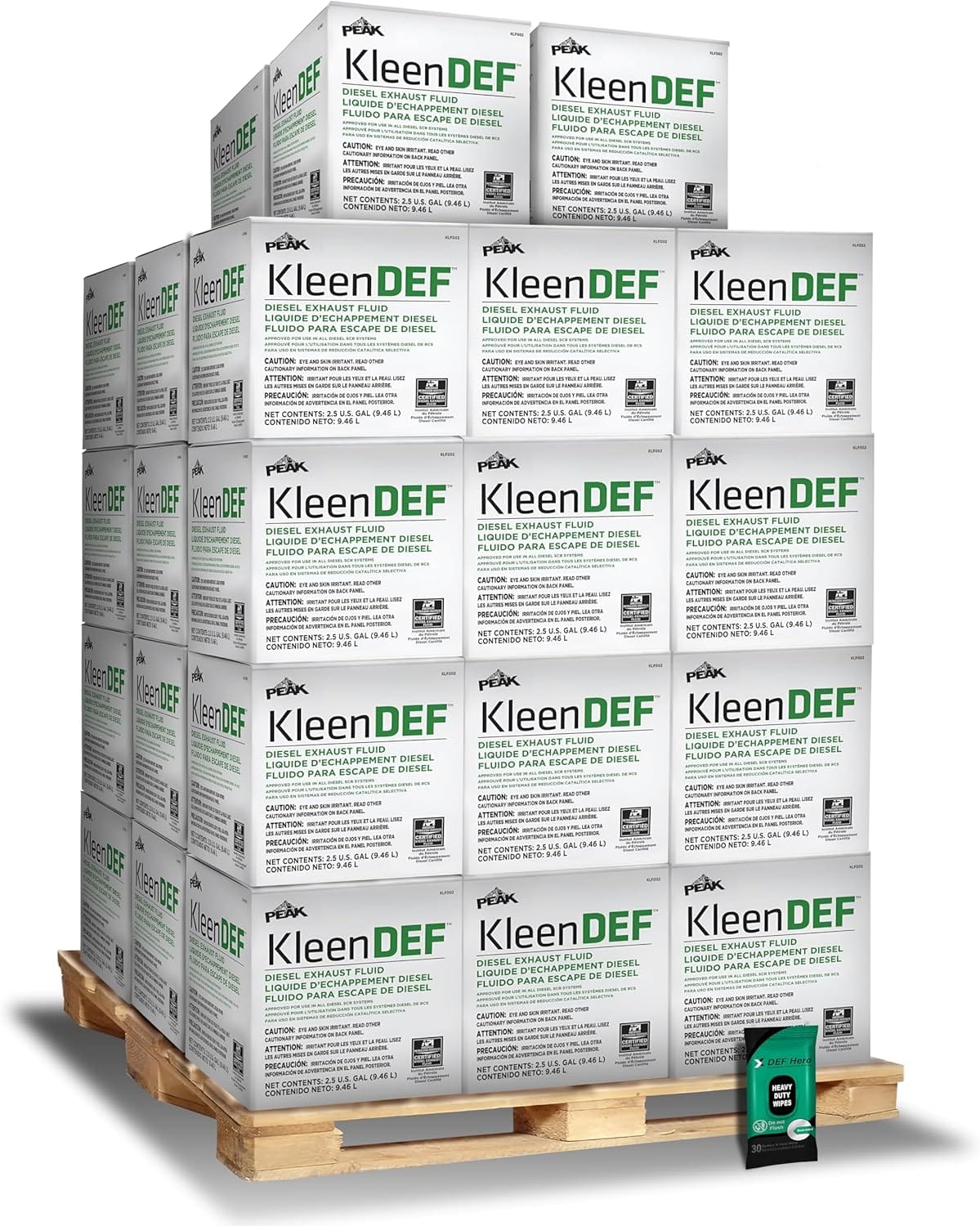
And then there is the option for people who take their diesel ownership very seriously or who run a fleet: PEAK KleenDEF in a 40-case pallet, 2.5-gallon jugs, 40 cases, delivered to your door. If you have the storage space and you want to never think about running out of diesel exhaust fluid again, a pallet purchase drops your per-gallon cost significantly. It comes with a pack of heavy duty wipes, which you will need because DEF leaves white crystalline residue on everything it touches if you spill it.
DEF Additives and Crystal Buildup
Diesel exhaust fluid leaves behind urea crystals when it dries. You will see this as a white powdery residue around the fill cap if you have ever spilled any during filling. Inside the SCR system, crystal buildup on injectors and in the dosing system can cause performance issues over time and trigger fault codes.
Hot Shot’s Secret Defender DEF Booster is an additive designed to clean and prevent that crystal buildup. It goes into the DEF tank, not the fuel tank, and works through the SCR system as the DEF is consumed. For a high-mileage truck or one that has been sitting for a while with old DEF in the tank, this is worth considering. For a new truck driven regularly, fresh DEF from a reputable source is usually sufficient to prevent buildup on its own.
The more common cause of crystal issues is old or contaminated DEF. Diesel exhaust fluid has a shelf life of approximately two years when stored properly, meaning out of direct sunlight and away from temperature extremes. DEF stored in a hot garage through a summer will degrade faster. If you are buying in bulk, store it properly and rotate your stock.
What Contaminates Diesel Exhaust Fluid
DEF is sensitive to contamination in ways that most fluids are not. Even small amounts of certain contaminants can damage the SCR catalyst, which is an expensive component.
Do not put anything in the DEF tank except certified diesel exhaust fluid. Do not use water to top it off if you are running low. Do not let diesel fuel get into the DEF tank, and absolutely do not put DEF in your diesel fuel tank. The fill ports are different sizes and colors specifically to prevent cross-contamination, but it happens, and when it does the repair bill is significant.
If you suspect contamination, do not drive the truck. Have the DEF tank drained and flushed. A contaminated SCR catalyst is a five-figure problem on a modern diesel truck.
DEF in Cold Weather
Diesel exhaust fluid freezes at around negative 11 degrees Fahrenheit. If your truck sits outside in extreme cold and the DEF tank freezes, the system is designed to handle it. The DEF tank has a heating element that thaws the fluid using engine coolant heat once the truck is running. You may see a DEF-related warning on startup in very cold weather that clears on its own once the system warms up. That is normal.
Do not try to thaw DEF with external heat or additives not designed for the purpose. The system manages it on its own. Start the truck, let it warm up, and the warning will go away.
How to Fill Your DEF Tank
Filling the DEF tank is straightforward but there are a few things worth knowing before you do it for the first time.
The fill port is behind the blue cap in your fuel door. On most trucks it is a smaller diameter than the diesel fill port specifically to prevent accidentally putting diesel in the DEF tank. Blue DEF and most other major brands sell their 2.5-gallon jugs with a nozzle that fits directly into the DEF fill port. Twist off the blue cap, insert the nozzle, and fill slowly. DEF foams slightly when you pour it, so going slow prevents overflow and spills.
If you spill DEF on your paint or on metal surfaces, wipe it up promptly with a damp cloth. It is not corrosive, but it leaves white crystalline residue when it dries that is harder to clean up after the fact.
Keep a jug in the truck if you are going on a long trip or doing heavy towing. Running out of DEF on the highway is a preventable inconvenience.
Bottom Line
Diesel exhaust fluid is simple chemistry doing an important job. It keeps your truck’s SCR system converting NOx into harmless nitrogen and water, it keeps you on the right side of federal emissions regulations, and it keeps your truck out of limp mode. Keep the tank topped off, buy certified DEF from a reputable brand, store any bulk supply properly, and do not put anything in that blue-capped tank that does not belong there. Everything else takes care of itself.