IF IT GOES ... IT'S VEHICULAR
R1150RT Teardown: The Honest Truth About What I Found
I bought a 2002 BMW R1150RT from a man in Joliet, Illinois. It had been his son’s bike. The son had died, not on the bike, and the father rode it for a couple of years before deciding he wanted something bigger for longer trips. He bought a large Indian dresser and the BMW needed a new home.
I have always loved BMWs. The classic lines, the boxer engine sticking out on both sides like it owns the place, the over-engineered everything. When I found this one I did not hesitate.
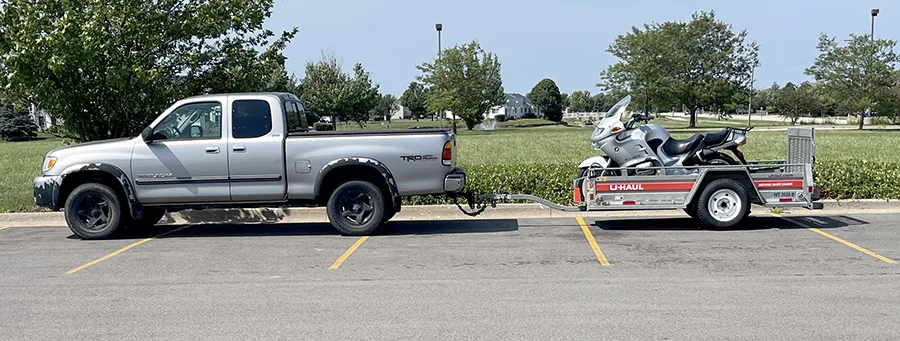
It was driveable when I picked it up but I was alone, so I rented a U-Haul trailer and towed it home. That was the right call. Riding an unknown machine on the highway before you know what you have is a different kind of gamble than doing it with a car. A car that surprises you is an inconvenience. A motorcycle that surprises you is a different conversation entirely.
The Decision to Go Through It
When I got it home I knew I was going to tear it down. Not because anything was obviously wrong, but because peace of mind on a motorcycle has to be earned. You cannot buy it with an inspection report and a handshake. You earn it by getting your hands into every system and knowing what you have.
I laid out a plan: brake system, driveshaft, tires, all fluids, new battery, and a full tune up. What followed was more involved than I expected and more satisfying than I had any right to hope for.
The Hall Sensor: Start With the Hard Thing
I started with the Hall sensor. On the R1150RT this is the ignition timing sensor and if it needs replacement you have to order it and wait. I wanted to give it time if that was going to be the case.
It was in good shape. That was a relief and it set the tone for the whole project — this was a bike that had been ridden but not abused.
The ABS System: Not for the Faint of Heart
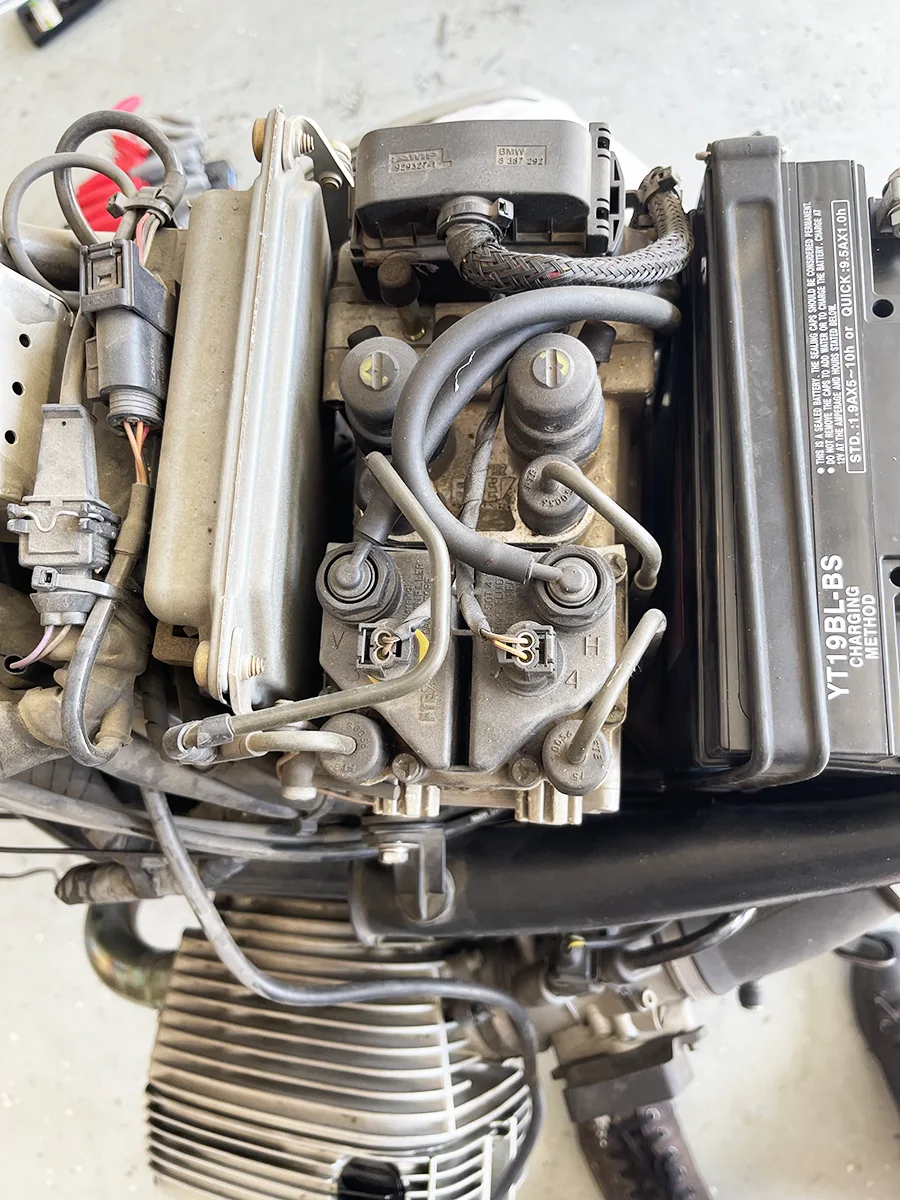
The R1150RT runs a full integral ABS system. BMW’s integral ABS links the front and rear brakes so that applying either engages both in a controlled ratio. It is sophisticated and it works well, but it requires annual maintenance at minimum.
Brake fluid attracts moisture. Old brake fluid with absorbed water has a lower boiling point and will fail you in hard braking situations. Never keep an opened, half full bottle for later. Use it or dispose of it.
The R1150RT has three separate brake circuits and they have to be bled in a specific order. There is a special tool required to keep each circuit free of air during the process. To get to everything you have to remove all the fairings and the fuel tank. It is quite the production.
I went through all three circuits completely. If I keep the bike long term I will replace the factory rubber lines with stainless steel braided lines. That pushes the service interval from annual back out to the two years BMW originally specifies. Worth doing.
The Driveshaft: Check It, Do Not Assume
The R1150RT uses a shaft drive instead of a chain. This is one of the things that makes BMW tourers attractive — no chain to adjust, no chain to replace, no chain to fling oil everywhere on a long trip.
But shaft drives have their own failure mode. The splines can wear or break, and on a bike with unknown history you want to know where yours stands before you find out on a highway somewhere.
I checked mine for play. It was solid. No wear worth noting. I drained and replaced the gear oil and moved on. That was a relief worth more than the hour it took to check.
Brakes, Battery, and a Cracked Fairing
The brake pads were straightforward, though nothing on this bike is exactly simple. New pads, new fluid throughout, done.
The battery was an easy swap to a YT19BL-BS. Straightforward, no surprises.
The fairing had a crack down on the chin panel, low on the bike near where you check the oil level through the sight glass in the block. I do a lot of 3D printing and I had ABS filament on hand. ABS filament welds to ABS plastic, which is exactly what motorcycle fairings are made from. The color was a close match. I used a length of filament and a soldering iron to bridge the crack, melting the filler material into the joint to bond the two pieces the same way you would weld metal. I sanded it down and hit it with a little paint. It is not perfect but it is solid and it is on the bottom of the fairing. Unless you are crouching down to check the oil you will never see it.
Valve Adjustment and Throttle Body Sync
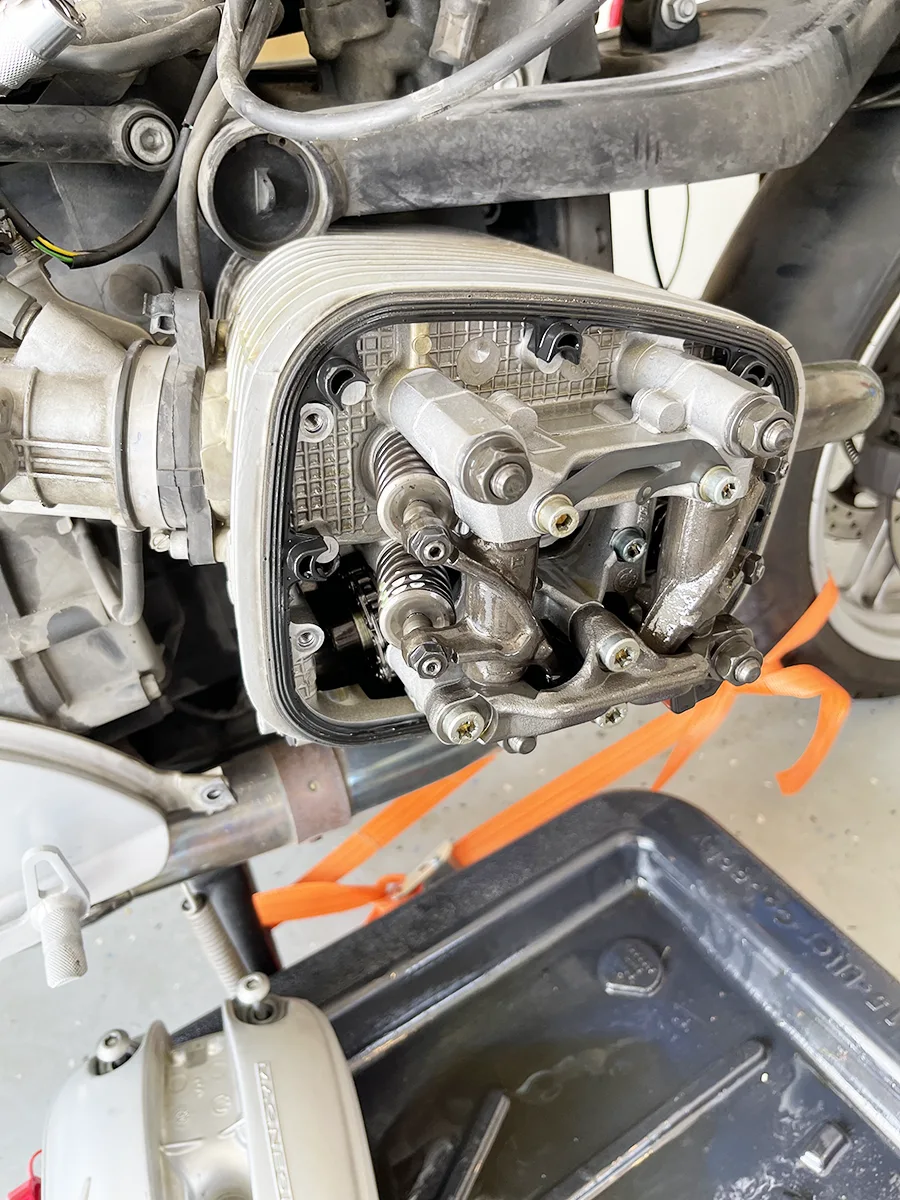
The R1150RT boxer engine uses rocker arms and the valves need periodic adjustment to stay within spec. I pulled both valve covers and went through the adjustment process on each cylinder. This is the kind of job that sounds intimidating until you do it, and then it becomes satisfying in the way that any precision mechanical work is satisfying when you get it right.
The throttle bodies also needed synchronization. The R1150RT has two throttle bodies, one per cylinder, and they need to be balanced so both cylinders are pulling equally. An imbalanced pair will run rough at idle and lose power through the rev range.
To do this right you need a tool. I used the CarbTune Pro, which uses a set of mercury-free columns to show you the vacuum differential between the two sides in real time. You adjust until the columns are matched and the engine settles into a smooth idle.
Before syncing I cleaned the injector ports. You do not sync dirty throttle bodies and expect the result to hold.
One More Problem: Where to Put the Phone
I was not happy with any of the commercial phone mount solutions for this bike. The R1150RT has a motorized adjustable windscreen and every bracket I looked at would have ended up in the way of the movement or in a position that required taking my eyes too far off the road to glance at a map.
So I designed one.
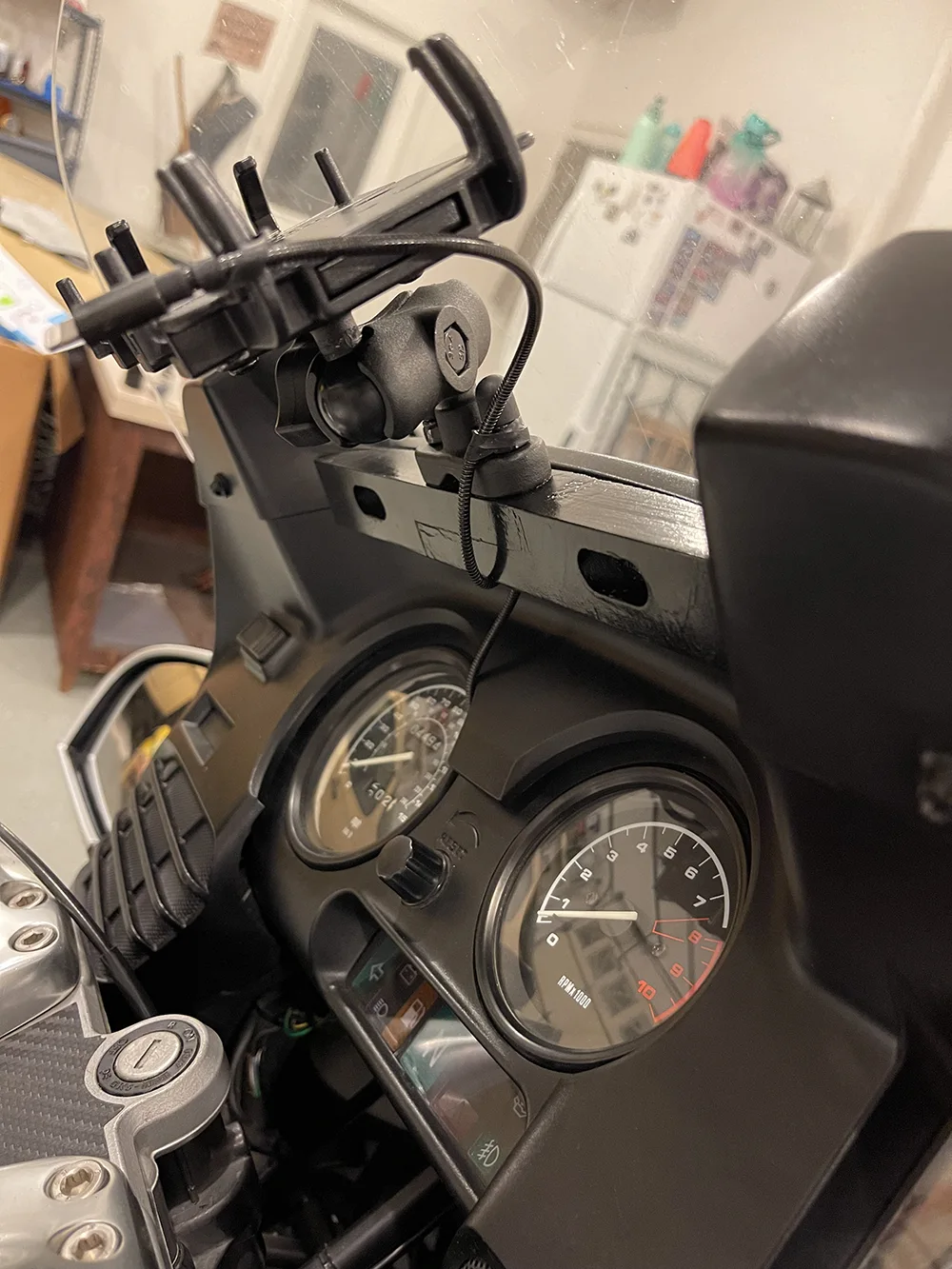
I modeled a custom mounting bracket that attaches to the dash in two places and positions the phone exactly where I wanted it — visible at a natural glance angle, clear of the windscreen travel, and out of the way of everything else. I printed it on my 3D printer.
The bracket was too long to print in a single run, so I designed a lap joint into it that coincided with the mounting hole locations. The bolt that secures the bracket to the dash passes directly through the lap joint. The joint and the mount become one assembly under tension. It is not going anywhere and the phone does not vibrate.
It is the kind of solution that takes longer to design than to explain, and once it is on the bike you forget it was ever a problem.
The Result
When everything was back together I had a bike I understood completely. Every fluid was fresh. Every system had been inspected and serviced. The things that were good I knew were good because I had checked them myself. The things that needed attention had been addressed.
The finished bike looks exactly like what it is — a well maintained 2002 touring machine that has been gone through properly. The boxer engine fires immediately, idles smoothly, and pulls cleanly through the whole rev range. The brakes are confidence inspiring in the way that freshly bled brakes always are.
Buying a used motorcycle is always a leap of faith. Tearing it down yourself is how you land on solid ground.
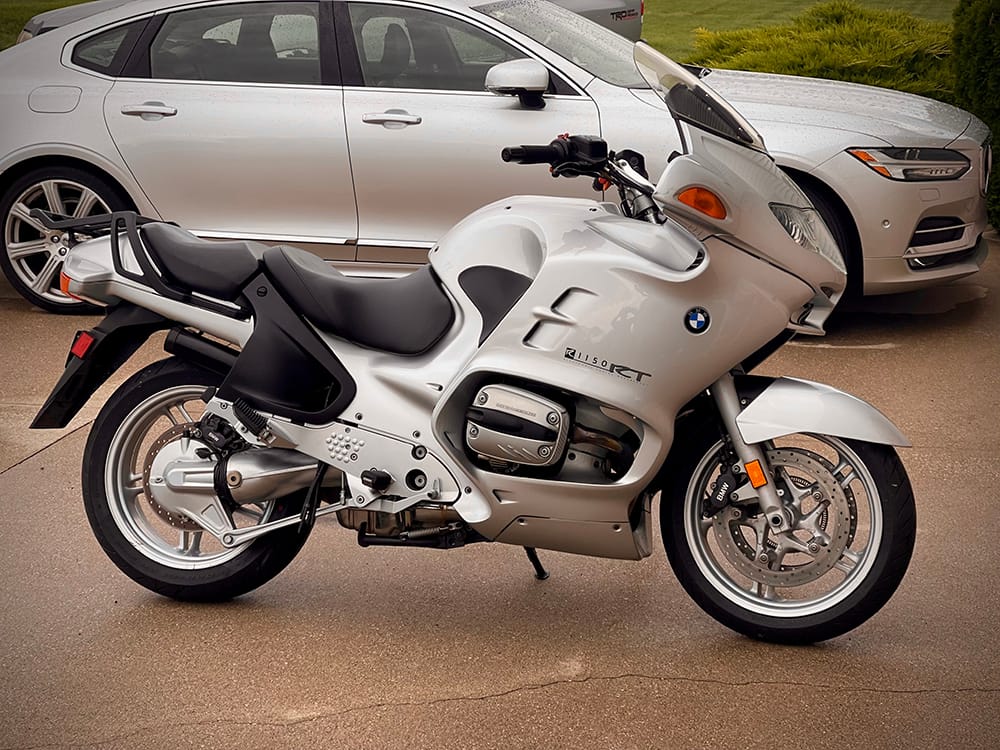
What the 2002 BMW R1150RT Is
If you are not familiar with the R1150RT, some context. The RT designation stands for Road Tourer. This is BMW’s sport touring platform — comfortable enough for long days in the saddle, capable enough to be genuinely enjoyable in the corners.
The 1150 refers to the engine displacement: 1130cc air and oil cooled flat twin, the famous boxer configuration that BMW Motorrad has been building variations of since 1923. The cylinders stick out horizontally on each side of the frame, air cooled by the wind, and it gives the bike a silhouette unlike anything else on the road.
Power is 85 horsepower at 7500 RPM with 74 lb-ft of torque at 5750. The shaft drive eliminates chain maintenance entirely. The integrated ABS was advanced for its time and remains effective. Dry weight is around 549 pounds.
These bikes were built to last and the R1150RT community is active and well documented. Parts are available. Knowledge is available. If you find a solid one and are willing to put in the work, you will have a touring machine that will outlast most of what is on the road today.