IF IT GOES ... IT'S VEHICULAR
What Is E85 and How Is Ethanol Made? The Honest Truth
What is E85 fuel, can your car use it, and is it worth it? Here's a plain-English breakdown of E85, how ethanol is made, and what it means for your engine and your wallet.
What Is E85 and How Is Ethanol Made?
You’ve seen it at the pump: E85, usually priced a few cents cheaper than regular gasoline. So what is E85, can your car use it, and is it actually worth it? Here’s everything you need to know about E85 fuel and how ethanol is made.
What is E85?
E85 is a fuel blend made up of 85% ethanol and 15% gasoline. The “E” stands for ethanol, and “85” refers to its percentage of the mix. It’s sometimes called flex fuel, and it’s designed specifically for flex-fuel vehicles (FFVs): cars and trucks built to run on any ethanol-gasoline blend from E0 (pure gasoline) all the way up to E85.
You can’t put E85 in a standard gasoline engine. The higher ethanol content requires different fuel system components, and using it in a non-flex-fuel vehicle can damage fuel lines, injectors, and seals over time.
What is E85 good for from a performance standpoint? Its octane rating of around 105 is higher than premium gasoline, which makes it attractive for performance applications. For everyday driving, though, the trade-offs matter just as much as the specs.

What is ethanol?
To understand what is E85, you first need to understand ethanol. Ethanol is grain alcohol: the same alcohol found in beer and wine, just denatured (made undrinkable) for use as fuel. Chemically it’s C2H5OH: two carbon atoms, six hydrogen atoms, one oxygen atom. It burns cleaner than gasoline, carries a high octane rating, and can be produced from renewable plant sources.
In the U.S., ethanol is made almost entirely from corn. Brazil, the world’s other major ethanol producer, uses sugarcane as its feedstock of choice. Both work, though sugarcane-based ethanol is generally considered more energy-efficient to produce.
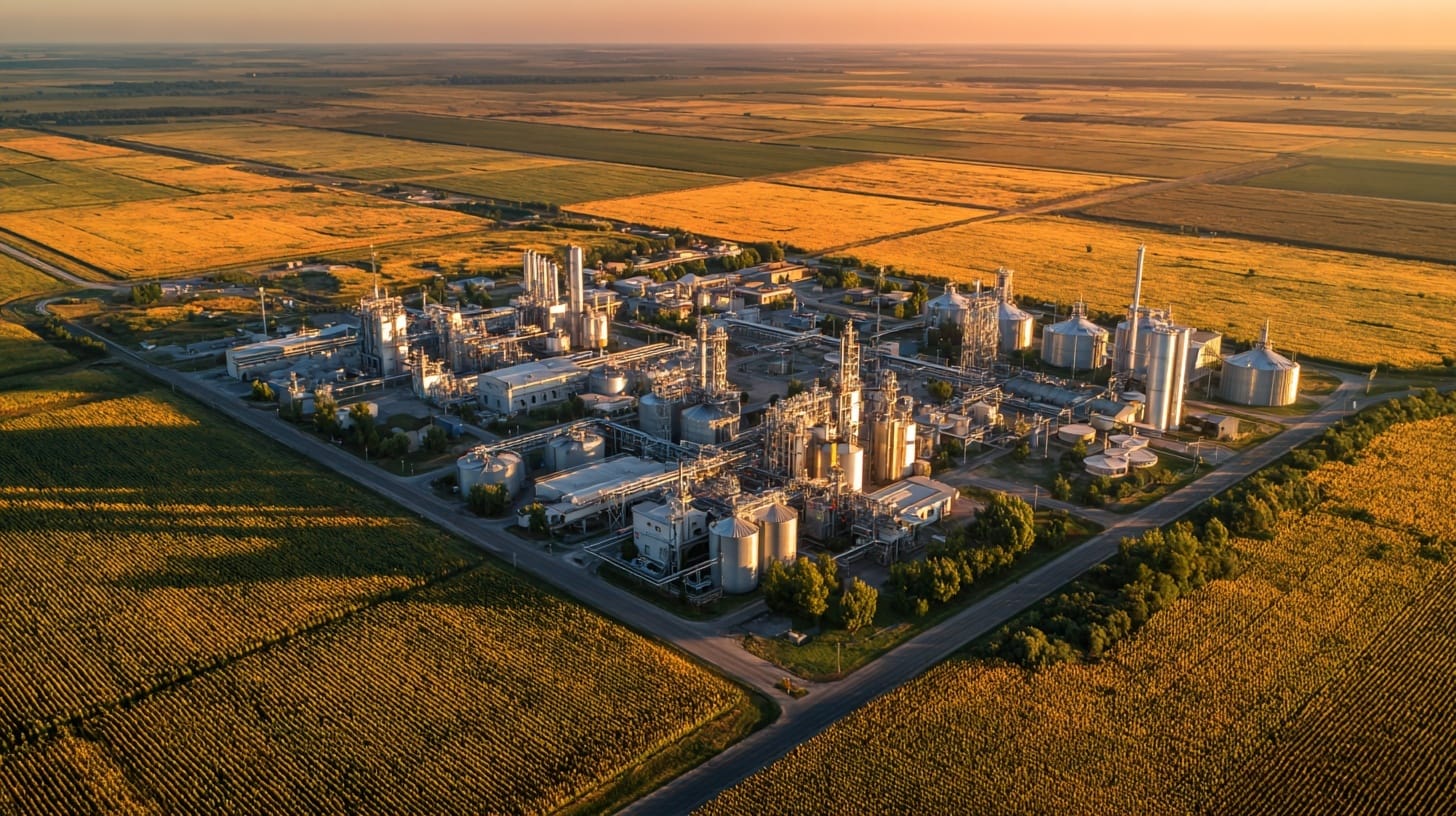
How is ethanol made?
Understanding how ethanol is made starts with fermentation: essentially the same biological process used to brew beer, just scaled up and optimized for fuel rather than flavor.
- Feedstock preparation – Corn is milled and cooked to break down its structure and release the starch.
- Enzymatic hydrolysis – Enzymes convert the starch into simple fermentable sugars.
- Fermentation – Yeast is added. Over several days it converts the sugars into ethanol and carbon dioxide, the same biological process behind every pint of beer.
- Distillation – The fermented liquid is heated. Ethanol vaporizes first, is captured, and condenses back into liquid form at high concentration.
- Dehydration – Molecular sieves remove remaining water, pushing purity above 99%.
- Denaturation – A small amount of gasoline is added to make it unfit for consumption, as required by law for fuel-grade ethanol.
- Blending – The denatured ethanol is blended with gasoline at an 85/15 ratio to produce E85 fuel.
How ethanol is made has evolved significantly over the past two decades. Modern facilities are far more efficient than early plants, and ongoing research continues to improve yield, reduce waste, and explore alternative feedstocks.
E85 pros and cons
Every fuel involves trade-offs, and E85 is no different. Understanding what is E85 in practical terms means weighing these advantages and disadvantages honestly.
The advantages:
- Higher octane rating (around 105) means better knock resistance and potential performance gains in tuned engines
- Domestic production reduces dependence on imported oil
- Lower carbon emissions during combustion compared to gasoline
- Often cheaper per gallon at the pump
- Renewable feedstock: you can grow more corn next year, you can’t grow more crude oil
The disadvantages:
- Lower energy density: E85 contains roughly 27% less energy per gallon than gasoline
- Worse fuel economy: expect 15-25% more trips to the pump
- Limited availability: not every station carries E85, and coverage outside the Midwest is spotty
- The price advantage at the pump is often erased by the MPG penalty
- Large-scale corn production raises legitimate concerns about land use and water consumption
The MPG math is worth doing before you commit. If E85 costs 15% less per gallon but your car gets 20% fewer miles per gallon on it, you’re spending more overall. Check the price gap at your local station before deciding which fuel to run.
Does E85 damage engines?
In a flex-fuel vehicle, no: they’re built for it. FFVs have ethanol-compatible fuel lines, injectors, and sensors that automatically adjust the fuel-air mixture based on ethanol content. In a standard gasoline engine, E85 can corrode rubber fuel lines, damage injectors, and in some cases void your warranty.
Always check your owner’s manual before experimenting with higher ethanol blends. If your vehicle is flex-fuel capable, it will usually say so on the fuel door or in the manual. You can also check by VIN: most manufacturers made this easy to look up.
Who uses E85?
The United States and Brazil account for the vast majority of global ethanol fuel use. Understanding how ethanol is made on a national scale helps explain why adoption varies so widely by region.
The U.S. has over 4,000 E85 stations, concentrated in the Midwest where corn production is highest. You can find your nearest E85 station using the US DOE Alternative Fuels Station Locator. Brazil has gone further than any other country, integrating ethanol deeply into its fuel supply: most Brazilian gas stations sell ethanol, and many vehicles run on straight ethanol rather than a blend.
Europe, Asia, and most of the Middle East use ethanol primarily as a low-percentage gasoline additive (E5 or E10) rather than as a high-blend fuel like E85.
Is E85 better for the environment?
The answer is more complicated than the marketing suggests.
Ethanol burns cleaner than gasoline: it produces fewer particulates and lower net CO2 emissions when you account for the carbon absorbed by the crops during growth. On a full lifecycle basis, corn ethanol reduces greenhouse gas emissions by roughly 40-50% compared to gasoline. The National Renewable Energy Laboratory continues to research ways to improve that figure further through advanced biofuel technologies.
The offsetting concerns are land use, water consumption, and the energy required to grow, harvest, and process the corn. Sugarcane ethanol scores significantly better on these metrics, which is part of why Brazil’s ethanol program is considered more sustainable than the U.S. corn-based model.
Cellulosic ethanol (made from agricultural waste, grasses, and woody biomass rather than food crops) is the long-term goal. It sidesteps the food vs. fuel debate entirely and has a much better environmental profile. The technology exists; scaling it economically is the ongoing challenge.
The bottom line
So what is E85 and is it worth using? It’s a legitimate, widely-used fuel with a real environmental case behind it: but it’s not for every driver or every car. If you have a flex-fuel vehicle and live somewhere with affordable, accessible E85, it’s worth running the numbers. If the price gap at the pump covers the MPG difference, you come out ahead and burn cleaner doing it.
If you’re not sure whether your vehicle is flex-fuel capable, check the inside of the fuel door, consult your owner’s manual, or look up your VIN. Most manufacturers made flex-fuel identification easy to find.